


Role
UI/UX Design & Research
Ideation & Planning
Team
Six-Person Team
Shared Research & Design
Project type
Industry-linked Academic Capstone
MCRI & Royal Children's Hospital
Timeline
12 Weeks
[Work-In-Progress]

MOBILE APPLICATION
Better Binding: Buddi
Buddi is a scrapbook-style digital diary concept for the Better Binding research project by Murdoch Children's Research Institute. It is designed for Australian transgender and gender-diverse youths aged 12–21 to document their first-time chest-binding journey over 12 months. Our team explores how participation could feel meaningful and bring trans euphoria to users instead of another clinical form to complete.
The Context
The Better Binding study will follow 300 transgender and gender-diverse (TGD) young people over 12 months to better understand their chest-binding experiences. Each participant will complete an entry every eight days, adding up to 47 entries.
Our task was to design an app that people would feel comfortable using throughout the study. This meant making check-ins easy to complete, protecting sensitive information and giving participants reasons to return without making missed entries feel like a failure.
How might we…
How might we design an app that helps TGD young people aged 12–21 share their chest-binding experiences to inform safer guidelines and more supportive care?
Research
We conducted 14 literature reviews about inclusive design, digital journaling and gamification to better understand the context and four app analysis for inspiration.
We also did three youth interviews, four expert interviews and four co-design sessions to understand what makes an app easy to use and worth coming back to.
Lastly, we also received advice from specialists and feedback from a TGD Youth Advisory Committee, shared through the project’s lived experience lead, Lux Newman.
The garden concept was one of my early ideas. After exploring other directions and gathering feedback, we moved forward with the scrapbook concept as a team.
Key Insights
Insight 1
Keep Personal Information Private
An important aspect throughout is user privacy. The app should not reveal what a user does not want others to know.
Design implication
Discreet reminders, optional PIN lock and settings for users to control what appears on their device.
Insight 2
Make It Easy
To Come Back
Some people liked streaks, while some found it guilt-inducing. YAC also highlighted how it causes frustration.
Design implication
Reduce dark gamification patterns and let users catch up on missed entries without starting over.
Insight 3
Users Value Progress
& Personalisation
Co-design participants liked simple questions, visible progress and opportunities to personalise the app.
Design implication
Create quick, easy-to-answer questions and support customisation with the avatar and scrapbook.
UX Mapping
We created four personas, and used participant sketches and screen flows to work through how someone would use Buddi, from setting up their account to completing check-ins and decorating their scrapbook.
We also mapped a possible 12-month journey to think about what would keep changing over time, how someone could catch up after a break and what they would have to look back on at the end.
Design Decisions
Decision 1
Build Something Personal
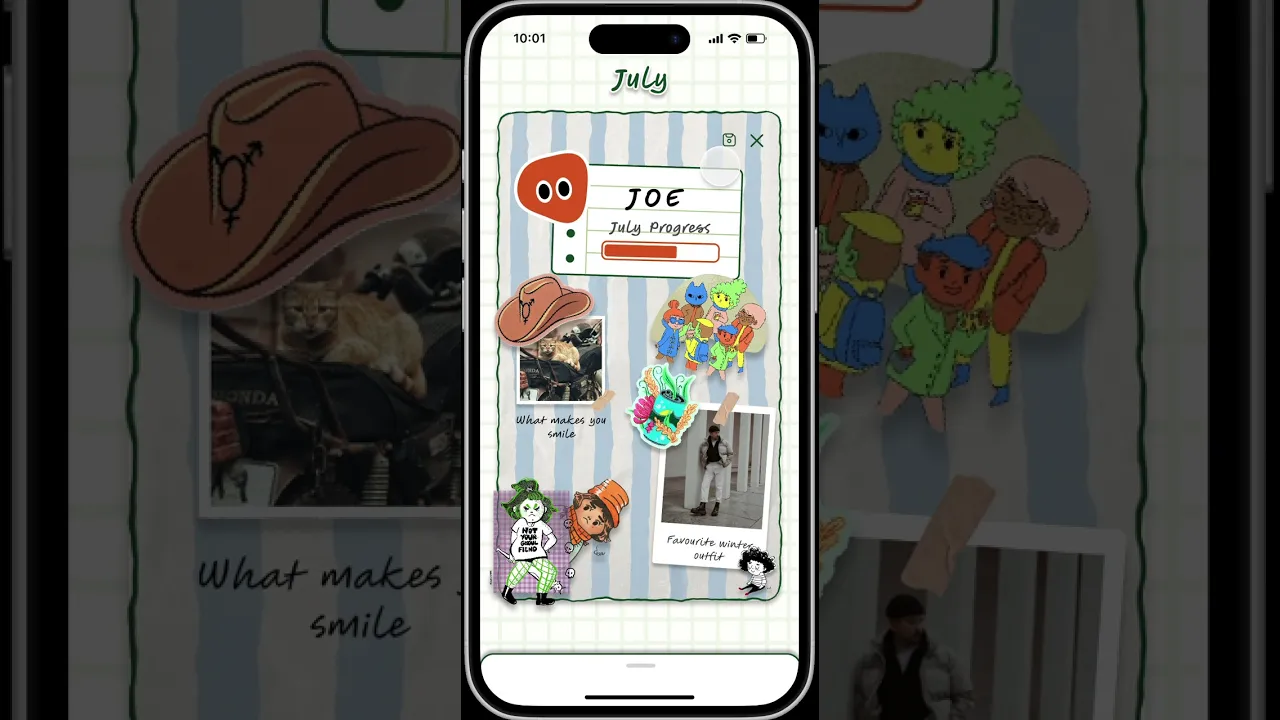
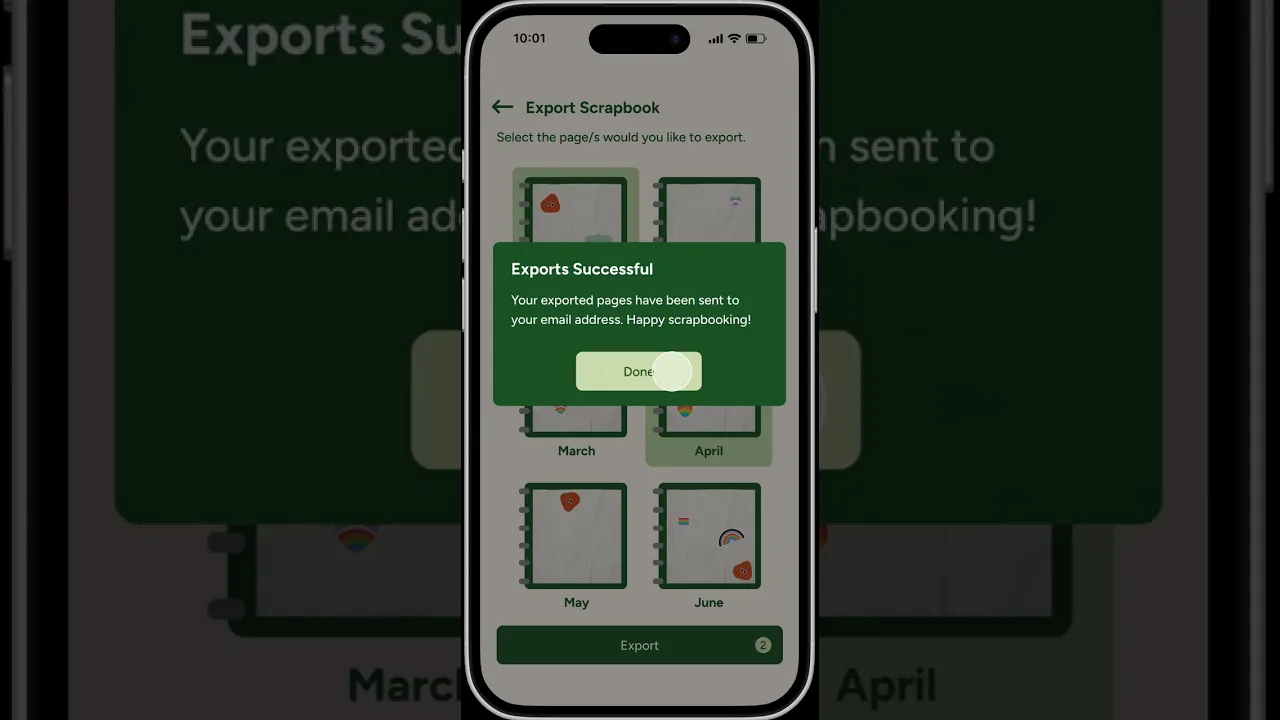
We chose a scrapbook concept where users can add photos, collect stickers and decorate monthly pages, gradually creating a record of their own journey.


Decision 2
Keep Check-Ins Simple
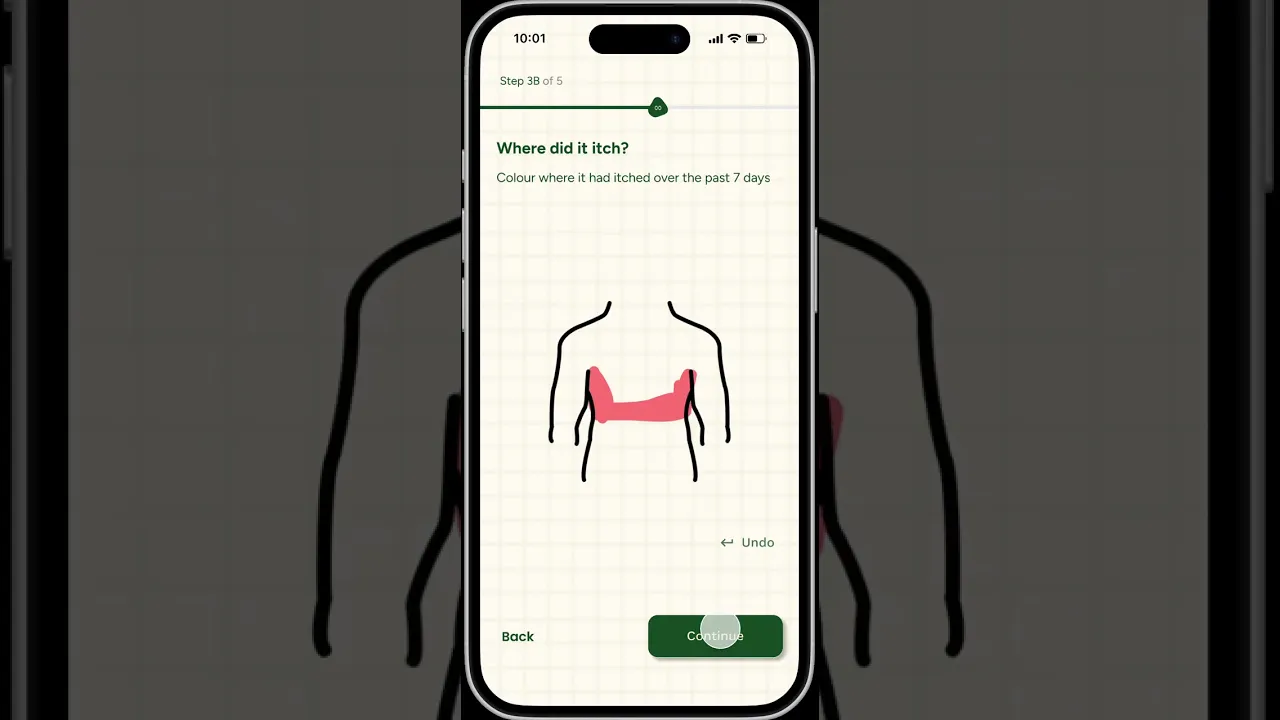
We designed the questions to use taps, sliders and body maps instead of long written texts as wanted the it to feel manageable, while collecting details the researchers needed.


Decision 3
Let Users Return Without
Losing Progress
To reduce dark gamification patterns, we ensure that missed surveys remain available, and users keep the stickers they have already collected.
Users can also anonymously gift stickers to other users to help encourage and motivate each other, while adhering to ethical standards of the study.


Brand Identity & Visual Design
We used notebook textures, stickers designed by TGD artists and a green-led, gender neutral palette to give Buddi a scrapbook feel. Users can customise their pages and avatar so the app feels more like their own space.
Buttons, progress indicators and question layouts are also kept consistent across the app, keeping the check-ins familiar even as the scrapbook changes.
We also ensure that our app considered accessibility needs, including colour vision deficiency and dyslexia, to make the it easier for different users to navigate.
Testing Insights
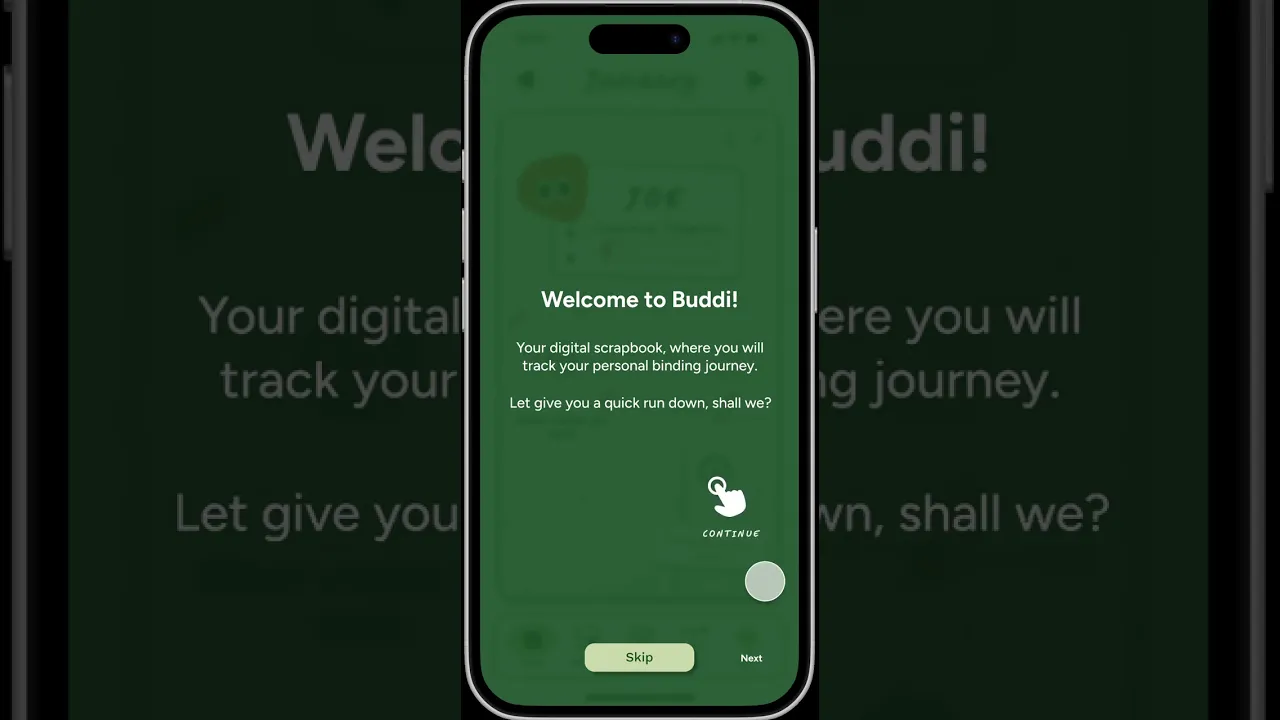
We tested our prototype two young people aged 12 and 19. They liked the stickers and tap-based questions, but some wording was unclear, the edit button was easy to miss and the tutorial had too much text.
Our client, A/Prof Ken Pang and Lux Newman, also saw a walkthrough of the prototype. Their feedback led us to update the gender options and support resources.
Prototype Iterations
Iteration 1
“Other” Option In Gender Question
The lived experience lead pointed out that the gender list might not include everyone. We added an “Other” option with a text field so users could write their own response.


Iteration 2
Select Appropriate Resources
The client noticed that one resource was intended for parents with TGD children and not TGD youths. We replaced it with an option more relevant to Buddi’s users.


Iteration 3
Highlight Ability To Make Changes
Another area pointed out by the clients was the clarity of the notification preferences, how it was not mentioned that users can edit them in the settings. We added on a bolded copy to highlight this information to users.


The Progress So Far
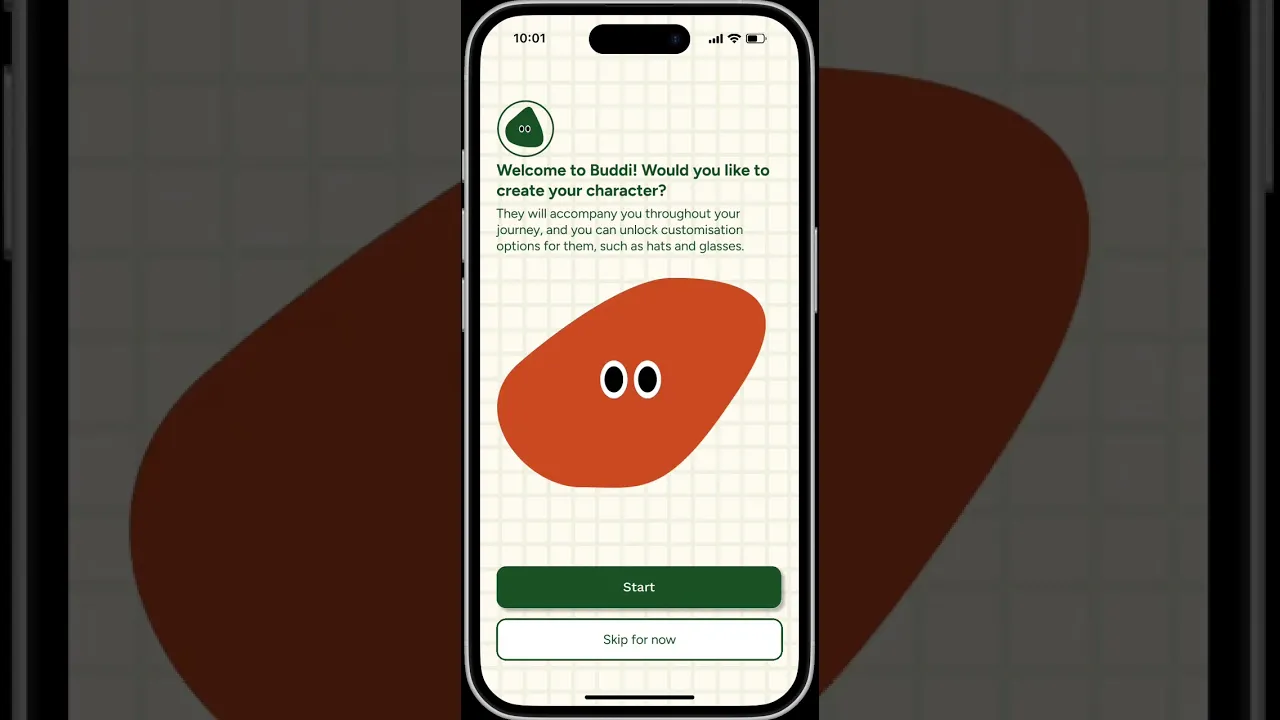
We have built an interactive prototype covering certain areas of the app such as onboarding, avatar creation, weekly check-ins and scrapbook editing.
Buddi is still a work in progress and will require further testing with TGD youths along with refinements and a clearer understanding of how it could be feasibly implemented into the study.

Reflection & Next Steps
This project has made me think more carefully about the features I usually associate with engagement. Streaks, rewards and reminders might encourage someone to return, but that does not always mean they feel good using them.
It also made me more mindful of how an app's design can affect users' emotions and experiences, especially when dealing with sensitive topics.
Buddi is still a work in progress and will require further testing with TGD youths. We will also need to work on the outlined refinements, and also have a clearer understanding of how it could be feasibly implemented into the study.
View Other Projects

MOBILE & DESKTOP APPLICATION
Compiled
Compiled is a multi-artist music merchandise platform that brings artists, collections and exclusive drops together in one place, making browsing and purchasing merch easier and more accessible.

MOBILE & DESKTOP APPLICATION
FitFlow
FitFlow is a responsive fitness app that combines personalised workouts, activity tracking and clear progress insights to help busy users fit fitness into their everyday lives.

MOBILE APPLICATION
Dive Deep
Dive Deep is a location-based mobile app concept that transforms Melbourne Museum into an interactive deep-sea expedition, inviting visitors to uncover stories through artefact-led discovery.

Shannon
Liaw
shannonliaw.yh@gmail.com